Abstract
The present study explores the relationship between emotional intelligence, academic motivation, and educational achievement among adolescent learners. Emotional intelligence helps adolescents understand, manage, and express emotions effectively, while academic motivation encourages them to participate actively in learning activities and pursue educational goals. Educational achievement reflects students’ academic performance, learning outcomes, and overall scholastic progress. The study examines how self-awareness, emotional regulation, empathy, confidence, goal orientation, interest in learning, and persistence influence academic success. It also highlights that emotionally intelligent learners are more likely to remain motivated, manage stress, develop positive relationships, and perform better in academic settings. The study concludes that strengthening emotional intelligence and academic motivation can enhance educational achievement and support the holistic development of adolescent learners.
- Emotional Intelligence
- Academic Motivation
- Educational Achievement
- Adolescent Learners
- Emotional Regulation
- Student Performance
Introduction#
Emotional intelligence, academic motivation and educational achievement are important dimensions of adolescent learning and development. Adolescence is a critical stage of life in which students experience rapid physical, emotional, social and cognitive changes. During this period, learners face academic pressure, peer influence, identity formation, examination stress and future career concerns. Therefore, their success in education depends not only on intellectual ability but also on emotional control, motivation, confidence and adjustment.
Emotional intelligence refers to the ability to understand, manage and express emotions effectively. It includes self-awareness, self-regulation, empathy, social skills and emotional control. An emotionally intelligent student can recognize personal feelings, manage stress, understand others’ emotions and maintain positive relationships with teachers and peers. Such students are better able to handle academic challenges, examination anxiety and classroom pressure. Emotional intelligence helps learners remain calm, focused and confident in difficult situations.
Academic motivation is another important factor in student achievement. It refers to the inner desire, interest and willingness of learners to participate in academic activities and achieve educational goals. Motivated students attend classes regularly, complete assignments, participate in learning tasks and work hard to improve their performance. Academic motivation may be intrinsic, when students learn due to interest and curiosity, or extrinsic, when they study for marks, rewards, praise or career goals. Both forms of motivation influence learning behaviour and academic performance.
Educational achievement refers to the academic performance and learning outcomes of students. It is generally measured through marks, grades, test scores, classroom performance and overall scholastic progress. Educational achievement is influenced by many factors such as intelligence, study habits, family support, school environment, teacher guidance, emotional stability and motivation. Among adolescent learners, emotional intelligence and academic motivation play a significant role in improving achievement because they affect attention, persistence, discipline and coping ability.
The relationship among emotional intelligence, academic motivation and educational achievement is highly meaningful. Students with higher emotional intelligence are generally better at managing stress, maintaining concentration and developing positive attitudes toward learning. This emotional balance strengthens academic motivation. Motivated students are more likely to set goals, work consistently and overcome academic difficulties. As a result, they may achieve better educational outcomes.
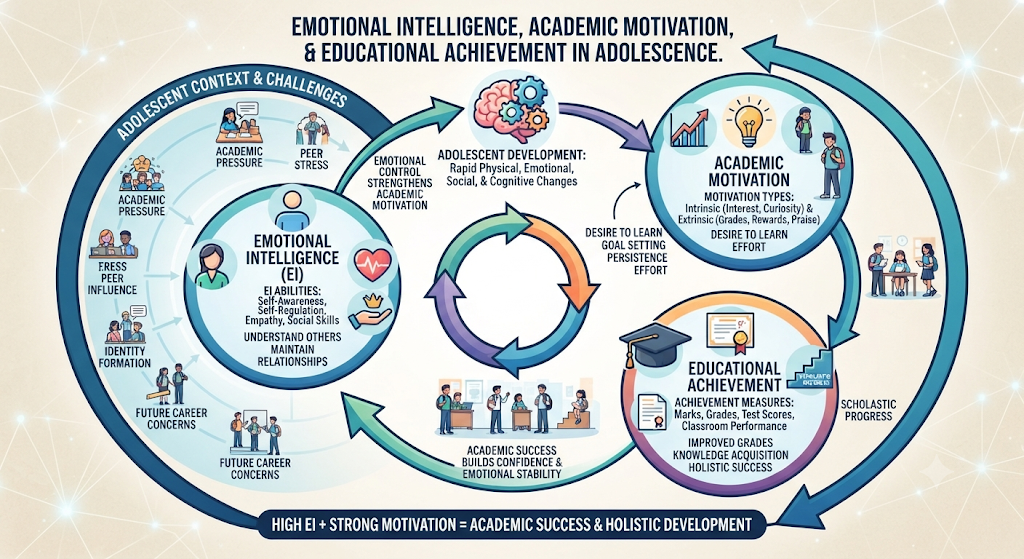
In the present competitive educational environment, adolescent learners often experience pressure related to examinations, expectations, comparison and career uncertainty. If students lack emotional regulation, they may become anxious, discouraged or distracted. Similarly, if academic motivation is low, they may show poor attendance, lack of interest and weak performance. Therefore, emotional intelligence and academic motivation are essential for academic success and holistic development.
Emotional Intelligence and Adolescent Learning Behaviour#
Emotional intelligence has emerged as an important psychological construct in understanding students’ learning behaviour and academic success. During adolescence, individuals experience rapid physical, cognitive, emotional, and social changes that significantly influence their educational experiences. Adolescents often encounter various challenges, including academic pressure, peer influence, identity formation, emotional fluctuations, and future career concerns. In such circumstances, emotional intelligence plays a crucial role in enabling learners to manage emotions effectively, adapt to changing situations, and engage positively in academic activities. Consequently, emotional intelligence is increasingly recognized as a significant determinant of adolescent learning behaviour.
The concept of emotional intelligence refers to the ability to perceive, understand, regulate, and utilize emotions effectively in oneself and others. The term gained widespread recognition through the work of Peter Salovey and John Mayer, who conceptualized emotional intelligence as a set of cognitive abilities related to emotional processing. Later, Daniel Goleman popularized the concept by emphasizing its importance for personal, social, and professional success. Emotional intelligence encompasses several dimensions, including self-awareness, self-regulation, motivation, empathy, and social skills.
Self-awareness constitutes the foundation of emotional intelligence. It refers to an individual's ability to recognize and understand personal emotions, strengths, weaknesses, and behavioural tendencies. Adolescents possessing high levels of self-awareness can identify their emotional states and understand how emotions influence thoughts, behaviours, and academic performance. Self-aware students are better able to recognize feelings of anxiety, frustration, stress, or disappointment associated with academic challenges and respond appropriately. Such awareness facilitates effective emotional management and contributes positively to learning behaviour.
Self-regulation represents another important dimension of emotional intelligence. It refers to the ability to control, manage, and modify emotional responses in accordance with situational demands. Adolescents frequently encounter emotionally challenging situations such as examination stress, peer conflicts, academic failures, and social pressures. Students with strong self-regulation skills can manage negative emotions constructively, maintain emotional balance, and avoid impulsive reactions. Effective emotional regulation enables learners to remain focused, persistent, and engaged in academic tasks despite difficulties or setbacks.
Motivation, particularly intrinsic motivation, is closely associated with emotional intelligence. Emotionally intelligent adolescents often demonstrate higher levels of self-motivation because they can channel emotions toward achieving personal and academic goals. Such students display greater persistence, commitment, and enthusiasm for learning activities. They are more likely to establish realistic goals, maintain effort, and overcome obstacles encountered during the learning process. Emotional intelligence therefore contributes significantly to positive learning attitudes and sustained academic engagement.
Empathy constitutes another essential component of emotional intelligence that influences adolescent learning behaviour. Empathy refers to the ability to understand and share the feelings, perspectives, and experiences of others. Empathetic students are generally more sensitive to the emotional needs of classmates and teachers, facilitating positive interpersonal relationships within educational settings. Positive peer relationships and supportive teacher-student interactions contribute significantly to collaborative learning, classroom participation, and overall academic adjustment.
Social skills represent the behavioural dimension of emotional intelligence. Socially skilled adolescents communicate effectively, resolve conflicts constructively, cooperate with peers, and establish positive interpersonal relationships. Effective social interactions enhance classroom participation, group learning experiences, and academic collaboration. Students possessing strong social competencies are generally more comfortable participating in discussions, seeking academic assistance, and engaging in cooperative learning activities. Consequently, social skills contribute positively to learning behaviour and educational outcomes.
Learning behaviour refers to the observable patterns of attitudes, habits, and actions that students exhibit during educational activities. It includes classroom participation, study habits, concentration, persistence, attention, academic engagement, and interactions with teachers and peers. Positive learning behaviour facilitates knowledge acquisition, skill development, and academic achievement. Emotional intelligence significantly influences these behavioural dimensions by affecting students’ emotional responses to learning experiences.
Classroom participation represents one important aspect of learning behaviour influenced by emotional intelligence. Emotionally intelligent students generally exhibit greater confidence and willingness to participate actively in classroom discussions, ask questions, and express opinions. Such participation enhances understanding, critical thinking, and academic engagement. Conversely, students experiencing emotional difficulties or low emotional intelligence may demonstrate withdrawal, reluctance to participate, or reduced classroom involvement.
Academic stress management constitutes another important area where emotional intelligence influences learning behaviour. Adolescents frequently experience stress arising from examinations, assignments, parental expectations, competition, and future educational aspirations. Moderate levels of stress may enhance motivation and performance; however, excessive stress can negatively affect concentration, memory, and academic functioning. Emotionally intelligent students employ effective coping strategies such as problem-solving, time management, emotional regulation, and social support seeking. These coping mechanisms enable students to manage academic stress effectively and maintain productive learning behaviours.
Attention and concentration are also influenced by emotional intelligence. Negative emotional states such as anxiety, anger, sadness, and frustration may impair cognitive functioning and reduce attentional capacity. Students possessing high emotional intelligence can regulate disruptive emotions and maintain concentration during learning activities. Effective emotional management therefore supports cognitive processes essential for academic success.
Study habits and self-directed learning behaviours are similarly associated with emotional intelligence. Emotionally intelligent adolescents often demonstrate greater self-discipline, organizational skills, and responsibility toward academic tasks. Such students are more likely to establish study schedules, complete assignments punctually, and engage in independent learning activities. Positive emotional functioning contributes to effective self-management and academic persistence.
Research consistently demonstrates positive relationships between emotional intelligence and various educational outcomes. Numerous studies indicate that students with higher emotional intelligence exhibit better academic achievement, stronger motivation, improved classroom behaviour, and greater educational adjustment. Emotional intelligence contributes to academic success not only directly but also indirectly through its influence on motivation, self-regulation, interpersonal relationships, and stress management.
Theoretical perspectives provide valuable insights into understanding the relationship between emotional intelligence and learning behaviour. Social-emotional learning theory emphasizes the importance of developing emotional competencies for educational success and positive development. Bandura's social cognitive theory highlights the role of self-efficacy, self-regulation, and social influences in shaping learning behaviour. Gardner's theory of multiple intelligences further recognizes interpersonal and intrapersonal intelligences as important dimensions of human capability.
Educational institutions increasingly recognize the importance of emotional intelligence development among adolescents. Social-emotional learning programmes have been introduced in many schools to promote self-awareness, emotional regulation, empathy, communication skills, and responsible decision-making. Such interventions contribute positively to academic performance, classroom climate, and student well-being.
Teachers play a critical role in fostering emotional intelligence among adolescent learners. Supportive teacher-student relationships, emotionally safe classroom environments, collaborative learning experiences, and positive reinforcement practices facilitate emotional development. Teachers who demonstrate empathy, effective communication, and emotional support create learning environments that promote positive student behaviour and engagement.
Parents also contribute significantly to the development of emotional intelligence. Family environments characterized by warmth, communication, emotional support, and positive parenting practices foster healthy emotional development among adolescents. Parental involvement and emotional support strengthen students’ confidence, resilience, and motivation, thereby positively influencing learning behaviour.
A multidisciplinary perspective enriches understanding of emotional intelligence and adolescent learning behaviour. Psychology examines emotional processes and developmental aspects; education studies explore instructional implications; sociology investigates social relationships and environmental influences; and neuroscience examines the biological foundations of emotional functioning. Integrating these perspectives facilitates comprehensive understanding and effective educational interventions.
Academic Motivation as a Driving Force for Educational Success#
Academic motivation is one of the most important psychological factors influencing students’ educational success. It refers to the internal and external forces that stimulate, direct, and sustain students’ interest, effort, and persistence in academic activities. Motivation encourages learners to participate actively in classroom activities, complete assignments, set educational goals, and strive for academic excellence. Among adolescent learners, academic motivation is particularly significant because adolescence is a period marked by numerous developmental changes, increasing academic demands, and future career aspirations. Consequently, academic motivation serves as a driving force that shapes learning behaviour, educational engagement, and academic achievement.
Academic motivation can be defined as the willingness, desire, and enthusiasm of students to engage in learning activities and achieve educational goals. Motivated learners demonstrate curiosity, determination, commitment, and persistence in academic tasks. They are more likely to invest effort in learning, overcome obstacles, and maintain interest even when faced with challenges. Motivation therefore plays a central role in determining the quality and effectiveness of learning experiences.
Educational psychologists generally classify academic motivation into two major categories: intrinsic motivation and extrinsic motivation. Intrinsic motivation refers to engaging in learning activities for personal satisfaction, enjoyment, curiosity, or interest. Intrinsically motivated students participate in academic activities because they find learning meaningful and enjoyable. They are driven by internal factors such as intellectual curiosity, personal growth, mastery, and self-improvement. Such students often demonstrate deep learning approaches, creativity, and sustained engagement in educational activities.
Extrinsic motivation, in contrast, refers to participation in academic activities to obtain external rewards or avoid negative consequences. Extrinsically motivated students may study to achieve high grades, receive praise, gain social recognition, satisfy parental expectations, or secure future career opportunities. External rewards such as certificates, scholarships, awards, and academic recognition often influence student behaviour. Although extrinsic motivation can effectively stimulate academic effort, excessive dependence on external rewards may reduce intrinsic interest in learning.
Both intrinsic and extrinsic motivation contribute to educational success; however, research consistently indicates that intrinsic motivation is more strongly associated with long-term academic engagement, deeper learning, and sustained educational achievement. Students who are intrinsically motivated tend to demonstrate greater persistence, self-regulation, and academic satisfaction compared to those primarily motivated by external rewards.
Academic motivation influences educational success through multiple mechanisms. One of the most important pathways is academic engagement. Motivated students actively participate in classroom discussions, attend classes regularly, complete assignments, and engage in independent learning activities. They demonstrate higher levels of cognitive, behavioural, and emotional engagement in educational processes. Such active participation enhances knowledge acquisition, skill development, and academic performance.
Goal setting represents another important aspect of academic motivation. Motivated students typically establish clear educational goals and work systematically toward their achievement. Goal-oriented learners demonstrate greater commitment, organization, and persistence. They are more likely to monitor their progress, evaluate performance, and modify strategies when necessary. Goal-setting behaviour contributes significantly to academic success by providing direction and purpose for learning activities.
Persistence and perseverance are closely associated with academic motivation. Educational journeys often involve challenges such as difficult subjects, examination stress, academic failure, and competitive pressures. Motivated students exhibit resilience and continue working toward their objectives despite setbacks and difficulties. They view challenges as opportunities for learning rather than as obstacles to success. Such persistence enhances academic achievement and promotes lifelong learning attitudes.
Self-regulated learning constitutes another important dimension influenced by academic motivation. Self-regulated learners actively plan, monitor, and evaluate their learning processes. Motivated students employ effective study strategies, manage time efficiently, seek assistance when needed, and maintain concentration during academic activities. Self-regulation enhances learning effectiveness and contributes positively to educational achievement.
Several factors influence academic motivation among adolescent learners. Family environment represents one of the most significant determinants. Supportive parents who provide encouragement, guidance, and positive educational expectations contribute substantially to student motivation. Parental involvement in educational activities, constructive feedback, and emotional support strengthen students' confidence and commitment toward learning.
Teacher-related factors also significantly affect academic motivation. Teachers play a central role in creating learning environments that stimulate student interest and engagement. Supportive teacher-student relationships, interactive instructional methods, positive reinforcement, and meaningful learning experiences enhance student motivation. Teachers who demonstrate enthusiasm, empathy, and effective communication inspire students and promote positive attitudes toward learning.
Peer relationships constitute another important motivational influence during adolescence. Positive peer interactions, collaborative learning experiences, and supportive friendships can enhance academic motivation. Conversely, negative peer influences may reduce interest in education and contribute to disengagement. Adolescents often value peer acceptance and social relationships; therefore, peer environments significantly affect educational attitudes and behaviours.
School climate and educational environment further influence student motivation. Schools characterized by supportive relationships, safe environments, effective leadership, and positive academic cultures promote higher levels of student motivation. Availability of learning resources, extracurricular opportunities, counselling services, and recognition systems also contributes to enhanced academic engagement.
Psychological factors such as self-esteem, self-efficacy, emotional intelligence, and aspirations significantly influence academic motivation. Students who believe in their capabilities and possess positive self-perceptions are generally more motivated to pursue academic goals. According to Bandura's social cognitive theory, self-efficacy beliefs strongly influence motivation, effort, and persistence. Students with high academic self-efficacy demonstrate greater confidence, resilience, and achievement.
Several theoretical perspectives explain the nature and importance of academic motivation. Self-Determination Theory, proposed by Deci and Ryan, suggests that motivation is influenced by the satisfaction of three fundamental psychological needs: autonomy, competence, and relatedness. When these needs are fulfilled, students experience greater intrinsic motivation and engagement.
Achievement Goal Theory emphasizes the role of students' goals in determining motivation and learning behaviour. Mastery-oriented students focus on developing competence and understanding, whereas performance-oriented students emphasize demonstrating ability and outperforming others. Mastery goals are generally associated with deeper learning and more positive educational outcomes.
Expectancy-Value Theory proposes that motivation depends upon students' expectations of success and the value they assign to academic tasks. Students are more likely to engage in activities when they believe they can succeed and perceive tasks as meaningful and valuable.
Despite its importance, academic motivation among adolescents may decline due to various challenges. Examination pressure, academic stress, excessive competition, fear of failure, lack of relevance in curriculum, and negative educational experiences may reduce student motivation. Digital distractions, social media overuse, and changing lifestyle patterns also present contemporary challenges to maintaining sustained academic motivation.
Educational institutions can adopt various strategies to enhance student motivation. Student-centred pedagogies, active learning approaches, collaborative activities, experiential learning, and technology integration contribute positively to motivation. Recognition of student achievements, provision of constructive feedback, counselling services, and career guidance programmes further strengthen academic motivation. A multidisciplinary perspective enriches understanding of academic motivation because it intersects with psychology, education, sociology, and developmental studies. Psychology examines cognitive and emotional determinants; education studies explore instructional practices; sociology investigates social influences; and developmental studies analyze age-related changes in motivational processes.
Educational Achievement and Factors Affecting Student Performance#
Educational achievement refers to the level of academic success attained by students in educational settings. It is generally measured through examination scores, grades, classroom performance, standardized tests, and overall scholastic accomplishment. Educational achievement is considered an important indicator of students’ learning outcomes, intellectual growth, and educational progress. In the contemporary educational system, academic achievement plays a significant role in determining future educational opportunities, career prospects, and personal development. However, educational achievement is influenced by numerous psychological, social, familial, institutional, and environmental factors that collectively shape students’ academic performance.
Academic achievement reflects not only students’ intellectual abilities but also their attitudes, motivation, study habits, emotional stability, and learning environment. Educational researchers increasingly recognize that academic success cannot be explained solely by intelligence. Rather, it is a multidimensional phenomenon influenced by interactions among cognitive, emotional, behavioural, and contextual factors.
One of the most important determinants of educational achievement is intelligence and cognitive ability. Cognitive abilities such as reasoning, memory, problem-solving, comprehension, and analytical thinking significantly influence learning and academic performance. Students possessing strong cognitive abilities generally demonstrate greater ease in understanding concepts, processing information, and applying knowledge. However, intelligence alone does not guarantee academic success, as many other personal and environmental factors also contribute significantly to achievement.
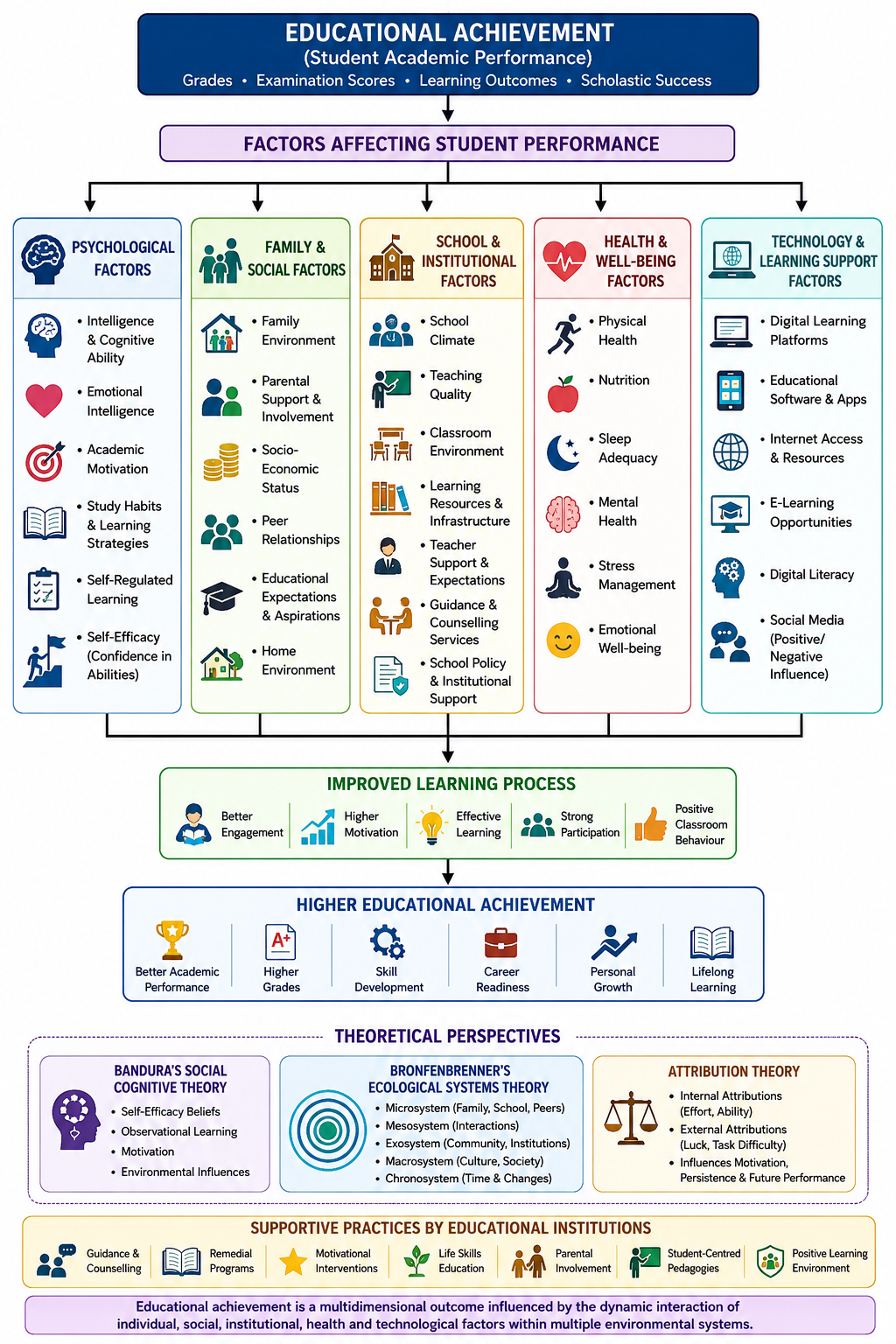
Emotional intelligence has emerged as an important predictor of educational achievement. Emotionally intelligent students are better able to regulate emotions, manage stress, maintain concentration, and develop positive interpersonal relationships. Such students can effectively cope with examination anxiety, academic pressure, and classroom challenges. Emotional stability enhances learning readiness, classroom participation, and persistence, thereby contributing positively to academic performance.
Academic motivation is another crucial factor influencing educational achievement. Motivated students exhibit greater interest in learning, actively participate in academic activities, and demonstrate persistence in completing educational tasks. Both intrinsic motivation, driven by curiosity and interest, and extrinsic motivation, influenced by rewards and recognition, can enhance academic engagement and performance. Students possessing strong academic motivation generally achieve higher educational outcomes because they invest greater effort and maintain sustained commitment toward learning.
Study habits and learning strategies significantly affect student performance. Effective study habits include regular study routines, time management, note-taking, revision practices, concentration, and systematic preparation for examinations. Students who adopt organized and strategic approaches to learning tend to achieve better academic results than those with irregular or ineffective study patterns. Self-regulated learning strategies such as goal setting, self-monitoring, and self-evaluation further contribute to educational success.
The family environment plays a vital role in shaping educational achievement among adolescent learners. Supportive family environments characterized by parental involvement, encouragement, emotional support, and positive educational expectations promote academic success. Parents who monitor academic progress, provide learning resources, and encourage educational aspirations contribute significantly to students' motivation and performance. Conversely, family conflict, lack of parental support, economic difficulties, and unfavourable home environments may negatively affect academic achievement.
Socio-economic status is another influential factor affecting educational performance. Students from higher socio-economic backgrounds often have greater access to educational resources, technology, quality learning materials, private tutoring, and conducive learning environments. Economic stability enables families to provide educational support and opportunities that facilitate academic success. In contrast, financial constraints may limit access to educational resources and create additional stressors affecting student performance.
The school environment constitutes an important contextual factor influencing educational achievement. School climate, infrastructure, teaching quality, classroom environment, availability of learning resources, and institutional support significantly affect student learning outcomes. Schools that provide safe, supportive, and stimulating learning environments promote academic engagement and achievement. Positive teacher-student relationships, effective instructional practices, and adequate educational facilities contribute substantially to student success.
Teachers represent one of the most influential factors in educational achievement. Effective teachers employ diverse instructional methods, provide constructive feedback, maintain positive classroom climates, and motivate students to achieve their potential. Teacher expectations and attitudes also influence student performance. Research indicates that supportive and encouraging teachers positively affect student confidence, motivation, and academic outcomes.
Peer relationships become increasingly important during adolescence and significantly influence educational achievement. Positive peer interactions can promote collaborative learning, motivation, and academic engagement. Friends who value education and demonstrate positive academic behaviours often encourage similar behaviours among peers. However, negative peer influences may contribute to academic disengagement and poor performance.
Mental health and psychological well-being also affect educational achievement. Adolescents frequently experience stress, anxiety, depression, and emotional challenges associated with academic demands, social relationships, and developmental changes. Psychological difficulties may impair concentration, motivation, memory, and classroom participation, thereby negatively affecting academic performance. Therefore, promoting student well-being is essential for educational success.
Physical health represents another important determinant of academic achievement. Adequate nutrition, physical activity, sleep, and overall health contribute to cognitive functioning and learning capacity. Poor health, chronic illness, sleep deprivation, and fatigue may reduce attention, memory, and academic performance. Healthy lifestyle practices therefore support educational achievement.
Technological factors increasingly influence educational achievement in contemporary educational contexts. Access to digital technologies, internet resources, online learning platforms, and educational software can enhance learning opportunities and academic performance. However, excessive use of social media, digital distractions, and inappropriate technology use may negatively affect study habits and achievement.
Several theoretical perspectives explain educational achievement. Bandura's Social Cognitive Theory emphasizes the importance of self-efficacy beliefs, observational learning, and environmental influences in determining academic performance. Students who believe in their capabilities are more likely to persist, exert effort, and achieve success.
Bronfenbrenner's Ecological Systems Theory highlights the influence of multiple environmental systems, including family, school, peers, and society, on student development and educational outcomes. This theory emphasizes that academic achievement results from interactions between individuals and their environments.
Attribution Theory explains how students interpret academic success and failure. Students who attribute success to internal factors such as effort and ability are generally more motivated and persistent than those who attribute outcomes to external or uncontrollable factors.
Educational institutions can enhance student achievement by implementing supportive educational practices. Guidance and counselling services, remedial programmes, motivational interventions, life skills education, parental involvement initiatives, and student-centred pedagogies contribute positively to academic outcomes. Schools should also focus on developing emotional competencies, study skills, and positive learning environments.
A multidisciplinary perspective enriches understanding of educational achievement because academic performance is influenced by psychological, sociological, educational, economic, and health-related factors. Psychology examines cognitive and emotional determinants; sociology explores social influences; education studies investigate instructional practices; economics analyzes socio-economic disparities; and health sciences examine physical and mental well-being.
Interrelationship among Emotional Intelligence, Motivation, and Academic Achievement#
Emotional intelligence, academic motivation, and educational achievement are closely interconnected constructs that play a significant role in the overall development and academic success of adolescent learners. Contemporary educational research increasingly emphasizes that academic achievement is influenced not only by cognitive abilities but also by emotional and motivational factors. Adolescents who are emotionally competent and academically motivated are generally more capable of coping with educational challenges, maintaining positive learning attitudes, and achieving superior academic outcomes. Therefore, understanding the interrelationship among emotional intelligence, motivation, and academic achievement is essential for promoting effective learning and holistic development.
Emotional intelligence refers to the ability to recognize, understand, manage, and utilize emotions effectively in oneself and others. Academic motivation refers to the internal and external forces that initiate, direct, and sustain students' engagement in learning activities. Educational achievement, on the other hand, represents the academic performance and scholastic accomplishment attained by learners through educational processes. These three constructs interact dynamically and collectively influence students' educational experiences and outcomes.
One of the most important relationships exists between emotional intelligence and academic motivation. Emotionally intelligent students generally possess greater self-awareness, emotional regulation, self-confidence, and resilience. These characteristics positively influence motivation by helping students maintain interest, enthusiasm, and persistence in learning activities. Students who can effectively manage emotions are less likely to become discouraged by academic setbacks and are more likely to remain committed to educational goals.
Self-awareness, an important component of emotional intelligence, enables students to understand their strengths, weaknesses, interests, and learning needs. Such awareness facilitates realistic goal setting and enhances intrinsic motivation. Students who understand their capabilities and limitations are more likely to establish achievable academic goals and invest sustained effort toward their attainment.
Emotional regulation also contributes significantly to academic motivation. Academic life frequently exposes adolescents to stress, anxiety, frustration, disappointment, and fear of failure. Students possessing strong emotional regulation skills can manage these negative emotions constructively and maintain motivation despite challenges. Rather than withdrawing from academic activities, emotionally intelligent learners view difficulties as opportunities for growth and improvement.
Self-motivation, often considered a dimension of emotional intelligence, directly influences educational engagement and achievement. Emotionally intelligent students frequently demonstrate greater determination, optimism, and perseverance. Such students exhibit stronger intrinsic motivation because they derive satisfaction from learning itself rather than relying exclusively on external rewards. Consequently, they are more likely to participate actively in educational activities and demonstrate sustained academic engagement.
The relationship between academic motivation and educational achievement is equally significant. Motivation serves as a driving force that energizes students to engage in learning activities, invest effort, and persist despite difficulties. Motivated learners attend classes regularly, complete assignments, participate actively in classroom discussions, and devote adequate time to studying. Such behaviours contribute positively to academic performance and educational success.
Research consistently demonstrates that students with higher levels of intrinsic motivation achieve superior academic outcomes compared to those with lower motivation levels. Intrinsically motivated learners often adopt deep learning strategies, demonstrate greater curiosity, and engage more meaningfully with educational content. These characteristics facilitate conceptual understanding, critical thinking, and long-term knowledge retention, thereby enhancing educational achievement.
Extrinsic motivation also contributes to educational achievement, particularly when external rewards and recognition encourage academic effort. However, excessive dependence on external incentives may not sustain long-term academic engagement. Therefore, fostering intrinsic motivation remains particularly important for promoting enduring educational success.
A strong positive relationship also exists between emotional intelligence and educational achievement. Emotionally intelligent students generally perform better academically because they possess competencies essential for successful learning. Such competencies include stress management, self-discipline, interpersonal skills, adaptability, and effective coping strategies. Emotionally intelligent learners can maintain concentration, regulate anxiety, and respond constructively to academic challenges.
Examination anxiety provides an important example of this relationship. Excessive anxiety often impairs concentration, memory, and performance during examinations. Students possessing high emotional intelligence can effectively manage examination-related stress and maintain emotional stability. Consequently, they are more likely to perform optimally during evaluative situations and achieve higher academic results.
Interpersonal competencies associated with emotional intelligence also contribute indirectly to educational achievement. Positive relationships with teachers and peers facilitate collaborative learning, social support, and classroom participation. Emotionally intelligent students often experience better social adjustment and stronger educational engagement, thereby enhancing academic performance.
The interrelationship among emotional intelligence, motivation, and academic achievement may also be understood through the concept of mediation. Academic motivation frequently serves as a mediating variable between emotional intelligence and educational achievement. In other words, emotional intelligence enhances motivation, which subsequently influences academic achievement. Students possessing higher emotional intelligence often exhibit stronger motivation, and this increased motivation contributes to improved educational outcomes.
Several theoretical perspectives explain these relationships. Bandura's Social Cognitive Theory emphasizes reciprocal interactions among personal factors, behaviour, and environmental influences. According to this theory, emotional competencies and self-efficacy beliefs influence motivation and academic performance through self-regulatory processes.
Self-Determination Theory, proposed by Deci and Ryan, suggests that satisfaction of psychological needs for autonomy, competence, and relatedness enhances intrinsic motivation and well-being. Emotional intelligence facilitates fulfilment of these needs by promoting effective self-regulation and interpersonal relationships, thereby enhancing motivation and achievement.
Achievement Goal Theory further explains how emotional competencies influence motivational orientations and academic behaviours. Students possessing strong emotional intelligence are more likely to adopt mastery-oriented goals emphasizing learning, understanding, and personal improvement. Such goals are associated with greater persistence, deeper learning, and higher academic achievement.
Empirical studies consistently report significant positive correlations among emotional intelligence, academic motivation, and educational achievement. Research findings indicate that emotionally intelligent students demonstrate stronger academic motivation, greater educational engagement, and superior academic performance. These relationships have been observed across diverse educational contexts, age groups, and cultural settings.
The educational implications of these findings are substantial. Schools should recognize that academic success depends not only upon intellectual capabilities but also upon emotional and motivational factors. Educational programmes designed to enhance emotional intelligence may simultaneously strengthen motivation and improve academic achievement. Social-emotional learning interventions focusing on self-awareness, emotional regulation, empathy, and interpersonal skills have demonstrated positive effects on educational outcomes.
Teachers play a crucial role in fostering emotional intelligence and motivation among adolescent learners. Supportive teacher-student relationships, positive classroom environments, constructive feedback, and student-centred instructional approaches promote both emotional development and academic motivation. Teachers should create learning experiences that encourage autonomy, competence, collaboration, and meaningful engagement.
Parents also significantly influence these interrelationships. Family environments characterized by warmth, encouragement, emotional support, and positive educational expectations contribute to emotional development, motivation, and academic success. Parental involvement and effective communication further strengthen students' educational aspirations and achievement.
A multidisciplinary perspective enriches understanding of these interrelationships because emotional intelligence, motivation, and achievement involve psychological, educational, social, and developmental processes. Psychology examines emotional and motivational mechanisms; education studies investigate instructional implications; sociology explores environmental influences; and developmental science examines age-related changes.
Conclusion#
Emotional intelligence, academic motivation and educational achievement are closely related to the academic success and overall development of adolescent learners. Emotional intelligence helps students understand and manage emotions, cope with stress, build positive relationships and remain confident during academic challenges. Academic motivation encourages learners to participate actively, set goals, work hard and remain consistent in studies.
The study highlights that emotionally intelligent students are generally more motivated and better prepared to handle examination pressure, classroom difficulties and personal challenges. Strong academic motivation further improves learning habits, concentration, persistence and educational performance.
Thus, emotional intelligence and academic motivation play an important role in enhancing educational achievement. Schools, teachers and parents should promote emotional learning, motivational support, counselling and positive classroom environments to help adolescents achieve better academic outcomes and holistic development.
Works Cited#
- Bar-On, Reuven. Bar-On Emotional Quotient Inventory: Technical Manual. Multi-Health Systems, 1997.
- Bandura, Albert. Self-Efficacy: The Exercise of Control. W. H. Freeman, 1997.
- Deci, Edward L., and Richard M. Ryan. Intrinsic Motivation and Self-Determination in Human Behavior. Plenum, 1985.
- Deci, Edward L., and Richard M. Ryan. “The ‘What’ and ‘Why’ of Goal Pursuits.” Psychological Inquiry, vol. 11, no. 4, 2000, pp. 227–268.
- Goleman, Daniel. Emotional Intelligence: Why It Can Matter More than IQ. Bantam Books, 1995.
- Mayer, John D., and Peter Salovey. “What Is Emotional Intelligence?” Emotional Development and Emotional Intelligence, edited by Peter Salovey and David J. Sluyter, Basic Books, 1997, pp. 3–31.
- Salovey, Peter, and John D. Mayer. “Emotional Intelligence.” Imagination, Cognition and Personality, vol. 9, no. 3, 1990, pp. 185–211.
- Schutte, Nicola S., et al. “Development and Validation of a Measure of Emotional Intelligence.” Personality and Individual Differences, vol. 25, no. 2, 1998, pp. 167–177.
- Petrides, K. V., and Adrian Furnham. “Trait Emotional Intelligence.” Personality and Individual Differences, vol. 36, no. 2, 2004, pp. 277–293.
- Zeidner, Moshe, Gerald Matthews, and Richard D. Roberts. Emotional Intelligence in the Workplace. Jossey-Bass, 2004.
- Pintrich, Paul R., and Elisabeth V. De Groot. “Motivational and Self-Regulated Learning Components of Classroom Academic Performance.” Journal of Educational Psychology, vol. 82, no. 1, 1990, pp. 33–40.
- Schunk, Dale H., Paul R. Pintrich, and Judith L. Meece. Motivation in Education: Theory, Research, and Applications. 3rd ed., Pearson, 2008.
- Wigfield, Allan, and Jacquelynne S. Eccles. “Expectancy–Value Theory of Achievement Motivation.” Contemporary Educational Psychology, vol. 25, no. 1, 2000, pp. 68–81.
- Ryan, Richard M., and Edward L. Deci. “Self-Determination Theory and the Facilitation of Intrinsic Motivation.” American Psychologist, vol. 55, no. 1, 2000, pp. 68–78.
- Zimmerman, Barry J. “Self-Efficacy: An Essential Motive to Learn.” Contemporary Educational Psychology, vol. 25, no. 1, 2000, pp. 82–91.
- Wentzel, Kathryn R. “Student Motivation in Middle School.” Journal of Educational Psychology, vol. 90, no. 2, 1998, pp. 202–209.
- Duckworth, Angela L., et al. “Grit: Perseverance and Passion for Long-Term Goals.” Journal of Personality and Social Psychology, vol. 92, no. 6, 2007, pp. 1087–1101.
- Durlak, Joseph A., et al. “The Impact of Enhancing Students’ Social and Emotional Learning.” Child Development, vol. 82, no. 1, 2011, pp. 405–432.