Abstract
The present study examines the role of inclusive education in creating equal learning opportunities for all students, including those with different abilities, learning styles, socio-economic backgrounds, disabilities, and special educational needs. Inclusive education practices include learner-friendly teaching methods, flexible curriculum, assistive technology, classroom adaptation, peer support, individualized attention, trained teachers, and a supportive school environment.
- Inclusive Education
- Academic Achievement
- Social Integration
- Psychological Well-Being
- Students with Diverse Needs
- Inclusive Classroom Practices
- Special Educational Needs
- Educational Equity
- Student Inclusion
- School Environment
Introduction#
Education is a fundamental human right and an essential means for personal, social, and national development. Every child, irrespective of ability, disability, gender, socio-economic background, language, ethnicity, or learning differences, has the right to receive quality education in a supportive and equitable environment. In recent decades, the concept of inclusive education has gained global importance as an approach that ensures equal educational opportunities for all learners. Inclusive education promotes the participation of all students in regular classrooms by addressing their diverse learning needs and eliminating barriers to learning and participation.
Inclusive education refers to an educational approach in which students with diverse abilities and needs learn together in the same classroom environment. Students with diverse needs may include those with physical disabilities, intellectual disabilities, learning difficulties, sensory impairments, emotional and behavioural challenges, giftedness, socio-economic disadvantages, linguistic diversity, and other special educational needs. Inclusive education emphasizes acceptance, participation, equality, respect, and individualized support rather than segregation or exclusion.
Traditional educational systems often separated students with disabilities or special educational needs into special schools or special classes. Although such arrangements provided specialized support, they frequently limited opportunities for social interaction, peer learning, and equal participation. Inclusive education emerged as an alternative philosophy that recognizes diversity as a natural characteristic of human society and promotes the education of all children together in regular schools. The inclusive approach seeks to create learning environments where every student feels valued, respected, and supported.
Inclusive education practices involve a variety of strategies designed to meet the individual needs of learners. These practices include differentiated instruction, flexible curriculum, individualized educational planning, cooperative learning, peer tutoring, assistive technologies, classroom accommodations, multisensory teaching methods, continuous assessment, and collaborative support services. Effective inclusive practices also require trained teachers, accessible infrastructure, supportive leadership, parental involvement, and positive attitudes toward diversity.
One of the most important outcomes of inclusive education is academic achievement. Academic achievement refers to students' performance in educational activities, including classroom participation, assignments, examinations, and overall learning outcomes. Inclusive classrooms provide opportunities for students with diverse needs to access quality instruction, participate actively in learning activities, and benefit from interactions with peers. Appropriate instructional adaptations and individualized support can significantly improve students' academic performance.
Social integration is another crucial dimension of inclusive education. Social integration refers to the extent to which students participate in social interactions, develop friendships, cooperate with peers, and experience a sense of belonging within the school community. Inclusive education encourages interaction among students from different backgrounds and abilities, thereby promoting acceptance, empathy, cooperation, and mutual respect. Positive peer relationships developed in inclusive settings can reduce social isolation, prejudice, discrimination, and stigmatization.
Psychological well-being is equally important in the educational development of students with diverse needs. Psychological well-being refers to emotional health, self-esteem, confidence, life satisfaction, emotional security, resilience, and positive self-concept. Students who feel accepted, supported, and included in school environments are more likely to experience positive psychological outcomes. Inclusive education can enhance students' self-confidence, motivation, emotional adjustment, and overall mental health by fostering a supportive and non-discriminatory learning environment.
Despite the recognized benefits of inclusive education, its successful implementation remains challenging in many educational systems. Schools often face difficulties such as inadequate teacher training, insufficient resources, lack of assistive technologies, inaccessible infrastructure, large class sizes, limited parental involvement, and negative societal attitudes toward disability and diversity. These challenges may affect the quality and effectiveness of inclusive practices.
Teachers play a central role in the success of inclusive education. Their attitudes, competencies, teaching methods, and willingness to accommodate diverse learning needs significantly influence students' academic, social, and psychological outcomes. Professional development programmes, inclusive pedagogy training, and collaborative teaching approaches are therefore essential for strengthening inclusive educational practices.
Furthermore, policy initiatives at national and international levels have emphasized the importance of inclusive education. International frameworks such as the Salamanca Statement, the United Nations Convention on the Rights of Persons with Disabilities, and the Sustainable Development Goals advocate inclusive and equitable quality education for all learners. Many countries have introduced policies and legislation to promote inclusive schooling and ensure equal educational opportunities.
The present study is significant because it seeks to examine how inclusive educational practices affect multiple dimensions of student development. By exploring academic, social, and psychological outcomes simultaneously, the study provides a comprehensive understanding of the effectiveness of inclusive education. The findings of the study may help teachers, school administrators, policymakers, parents, and educational planners develop more effective inclusive strategies and support systems. Strengthening inclusive education practices can contribute to creating equitable, supportive, and learner-centered educational environments where all students can achieve their full potential regardless of their differences or abilities.
Inclusive Education Practices and Academic Achievement#
Inclusive education practices play an important role in improving the academic achievement of students with diverse needs. Academic achievement refers to students’ progress and performance in classroom learning, assignments, examinations, projects, and overall educational development. In an inclusive classroom, all students learn together, including students with disabilities, learning difficulties, different socio-economic backgrounds, language differences, slow learning pace, giftedness, and emotional or behavioural challenges.
Inclusive education does not mean placing students with diverse needs in regular classrooms without support. It means providing proper teaching methods, learning materials, classroom adjustments, assistive devices, peer support, and individual attention according to students’ needs. When these practices are properly used, students with diverse needs can participate more actively in learning and improve their academic performance.
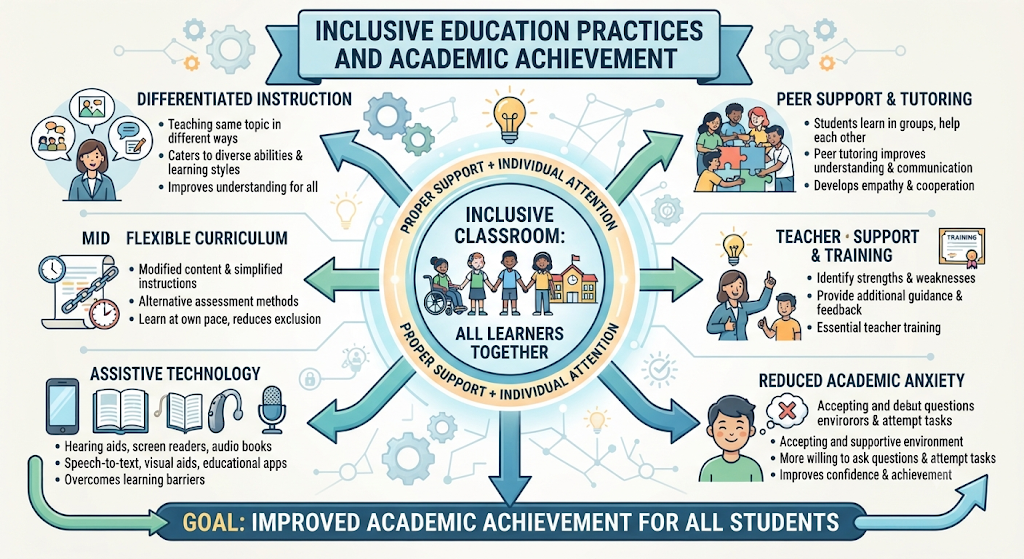
One important inclusive practice is differentiated instruction. It means teaching the same topic in different ways according to students’ abilities and learning styles. Some students may learn better through pictures, some through activities, some through oral explanation, and some through written exercises. When teachers use different methods, more students are able to understand the lesson. This improves learning outcomes and reduces academic difficulties.
Flexible curriculum is also important in inclusive education. Students with diverse needs may require modified content, simplified instructions, extra time, alternative assessment, or practical learning activities. Such flexibility helps students learn at their own pace without feeling excluded. It also helps teachers focus on meaningful learning rather than only marks.
Assistive technology can also improve academic achievement. Devices and tools such as hearing aids, screen readers, audio books, large-print materials, speech-to-text software, smart boards, visual aids, and educational apps help students overcome learning barriers. For example, a visually impaired student may learn better through audio material, while a child with writing difficulty may use assistive writing tools.
Peer support is another useful inclusive strategy. When students learn in groups, help each other, and participate in cooperative activities, students with diverse needs feel more confident. Peer tutoring can improve understanding, communication, and classroom participation. It also develops empathy and cooperation among all students.
Teacher support is the foundation of academic success in inclusive classrooms. Teachers must identify students’ strengths and weaknesses, provide additional guidance, use simple language, give regular feedback, and encourage participation. A supportive teacher can increase students’ motivation and confidence. Teacher training is therefore essential for effective inclusive education.
Inclusive classrooms also help reduce academic anxiety. Students with diverse needs often feel fear of failure or embarrassment. When the classroom environment is accepting and supportive, they become more willing to ask questions, attempt tasks, and participate in learning. This improves both confidence and achievement.
Inclusive Education and Psychological Well-Being#
Psychological well-being is an important part of students’ overall development. It refers to emotional security, self-confidence, self-esteem, happiness, motivation, resilience, and positive self-concept. Students with diverse needs may face many psychological challenges due to academic pressure, social exclusion, disability, learning difficulties, bullying, comparison with others, and lack of support. Inclusive education can help improve their psychological well-being by creating a safe and accepting school environment.
When students with diverse needs are included in regular classrooms with proper support, they feel valued and respected. This increases their sense of belonging. A child who feels accepted in school is more likely to develop confidence and emotional stability. Inclusion sends the message that every student is important and capable of learning.
Self-esteem is strongly influenced by school experiences. If students are constantly separated, ignored, or labelled as weak, they may develop low self-esteem. However, if they are encouraged to participate, appreciated for effort, and supported in learning, they begin to believe in their abilities. Inclusive education helps students recognize their strengths and develop a positive self-image.
Psychological well-being also improves when students experience success. Inclusive teaching methods allow students to learn at their own pace and achieve small goals. These achievements increase motivation and reduce fear of failure. When teachers provide positive feedback, students feel encouraged to continue learning.
Social acceptance is another important factor in psychological well-being. Students with diverse needs may feel lonely if they are not accepted by peers. Inclusive classrooms provide opportunities for friendship and peer support. Positive relationships reduce emotional stress and help students feel secure.
Inclusive education also reduces stigma. In segregated systems, students with special needs may feel different or inferior. In inclusive classrooms, diversity becomes normal. This reduces shame and promotes dignity. Students learn that every person has strengths and limitations.
A supportive teacher can greatly improve psychological well-being. Teachers who are patient, understanding, encouraging, and fair create emotional safety in the classroom. Such teachers help students overcome anxiety, hesitation, and fear. They also identify emotional difficulties and provide timely support.
Counselling support is also important in inclusive schools. Some students may need help in dealing with stress, frustration, peer pressure, learning difficulty, or emotional problems. School counsellors, special educators, and parents should work together to support students’ mental health.
Inclusive education also benefits students without special needs. It develops empathy, patience, social responsibility, kindness, and emotional maturity. Learning in a diverse environment helps all students become more sensitive and psychologically balanced.
Challenges and Measures for Effective Inclusive Education#
Although inclusive education is important, its successful implementation faces many challenges. One major challenge is lack of teacher training. Many teachers are willing to support students with diverse needs but may not know how to use inclusive teaching strategies. They may face difficulty in handling mixed-ability classrooms, preparing adapted lessons, using assistive devices, or managing behavioural issues.
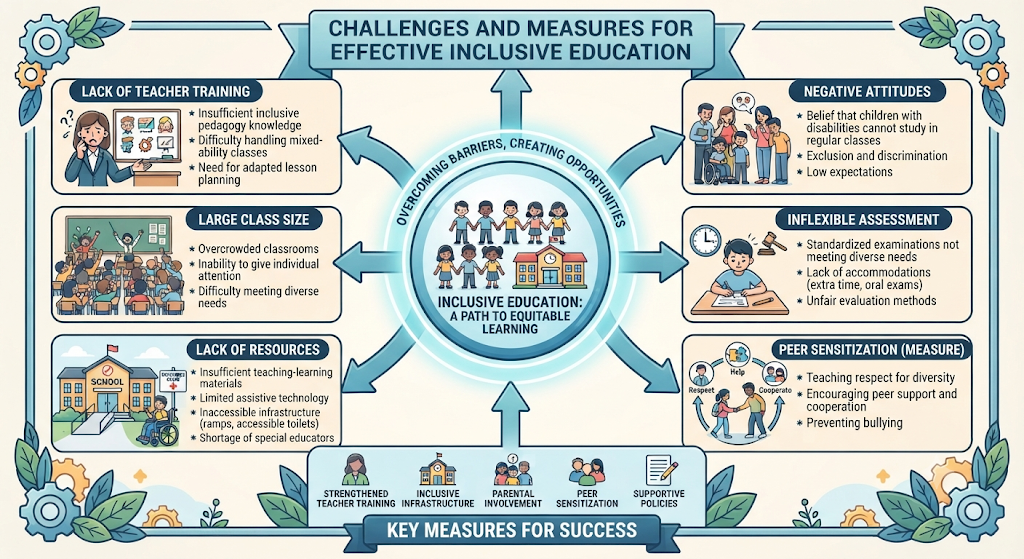
Another challenge is large class size. In overcrowded classrooms, teachers may not be able to give individual attention to every student. Students with diverse needs may require extra time, repeated explanation, modified tasks, or personal support. Large classes make this difficult.
Lack of resources is also a serious issue. Inclusive education requires teaching-learning materials, assistive technology, accessible infrastructure, special educators, counsellors, resource rooms, and support staff. Many schools do not have ramps, accessible toilets, visual aids, hearing support, or learning aids. Without these resources, inclusion becomes incomplete.
Negative attitudes are another barrier. Some teachers, parents, or students may believe that children with disabilities or special needs cannot study in regular classrooms. Such attitudes create exclusion, discrimination, and low expectations. Awareness and sensitization are needed to change these views.
Assessment systems can also create challenges. Standardized examinations may not meet the needs of all learners. Some students may require extra time, oral examination, practical assessment, simplified questions, or alternative evaluation methods. Without flexible assessment, students with diverse needs may be unfairly judged.
To make inclusive education effective, teacher training should be strengthened. Teachers should receive regular training in inclusive pedagogy, classroom adaptation, differentiated instruction, behaviour management, assistive technology, and emotional support. Special educators should work with general teachers to plan lessons and support students.
Schools should create inclusive infrastructure. Ramps, accessible classrooms, safe toilets, proper seating, visual materials, hearing support, and barrier-free movement are necessary. Learning materials should be available in different formats according to students’ needs.
Parents should also be involved in inclusive education. Teachers should communicate regularly with parents and understand each child’s needs, strengths, and difficulties. Parent-teacher cooperation helps in providing better support at school and home.
Peer sensitization is also important. Students should be taught to respect diversity, help classmates, avoid bullying, and cooperate in learning. Inclusive values should be part of school culture.
Government policies and school leadership must support inclusion. Adequate funding, trained staff, monitoring systems, counselling services, and inclusive curriculum are necessary. Inclusion should not remain only a policy statement; it should be practiced in daily classroom life.
Conclusion#
The study concludes that inclusive education practices have a significant positive influence on the academic achievement, social integration, and psychological well-being of students with diverse needs. Inclusive education provides equal learning opportunities by accepting differences in ability, background, learning style, language, and socio-economic condition. It supports the idea that every child can learn when proper guidance, resources, and emotional support are provided.
Inclusive classroom practices such as differentiated instruction, flexible curriculum, assistive technology, peer support, individualized attention, cooperative learning, and positive teacher behaviour help students improve their academic performance. These practices reduce learning barriers and encourage active participation in classroom activities.
The study also highlights that inclusive education promotes social integration by encouraging interaction, friendship, cooperation, empathy, and respect among students. When students with diverse needs learn with their peers, they develop confidence, belongingness, and social acceptance. At the same time, other students learn values of kindness, equality, patience, and respect for diversity.
Psychological well-being is also strengthened through inclusive education. Students feel valued, accepted, and emotionally secure in a supportive school environment. Inclusion improves self-esteem, motivation, confidence, emotional adjustment, and overall mental health. However, effective inclusive education requires trained teachers, accessible infrastructure, flexible assessment, positive attitudes, parental involvement, counselling support, and proper institutional resources.
Works Cited#
- Ainscow, Mel, Tony Booth, and Alan Dyson. Improving Schools, Developing Inclusion. Routledge, 2006.
- Avramidis, Elias, and Brahm Norwich. “Teachers’ Attitudes towards Integration/Inclusion: A Review of the Literature.” European Journal of Special Needs Education, vol. 17, no. 2, 2002, pp. 129–147.
- Booth, Tony, and Mel Ainscow. Index for Inclusion: Developing Learning and Participation in Schools. Centre for Studies on Inclusive Education, 2011.
- Florian, Lani, editor. The SAGE Handbook of Special Education. 2nd ed., SAGE Publications, 2014.
- Forlin, Chris, editor. Teacher Education for Inclusion: Changing Paradigms and Innovative Approaches. Routledge, 2010.
- Friend, Marilyn, and William D. Bursuck. Including Students with Special Needs: A Practical Guide for Classroom Teachers. 8th ed., Pearson, 2019.
- Gargiulo, Richard M., and Debbie Metcalf. Teaching in Today’s Inclusive Classrooms: A Universal Design for Learning Approach. 3rd ed., Cengage Learning, 2017.
- Giangreco, Michael F. “Working with Paraprofessionals.” Educational Leadership, vol. 64, no. 5, 2007, pp. 50–53.
- Hornby, Garry. Inclusive Special Education: Evidence-Based Practices for Children with Special Needs and Disabilities. Springer, 2014.
- Idol, Lorna. “Toward Inclusion of Special Education Students in General Education.” Remedial and Special Education, vol. 27, no. 2, 2006, pp. 77–94.
- Loreman, Tim, Joanne Deppeler, and David Harvey. Inclusive Education: Supporting Diversity in the Classroom. Routledge, 2010.
- Mittler, Peter. Working towards Inclusive Education: Social Contexts. David Fulton Publishers, 2000.
- Oliver, Mike. The Politics of Disablement. Macmillan, 1990.
- Rose, David H., Anne Meyer, and David Gordon. Universal Design for Learning: Theory and Practice. CAST Professional Publishing, 2014.
- Sharma, Umesh, Chris Forlin, and Tim Loreman. “Impact of Training on Pre-Service Teachers’ Attitudes and Concerns about Inclusive Education.” Disability & Society, vol. 23, no. 7, 2008, pp. 773–785.
- Slee, Roger. The Irregular School: Exclusion, Schooling and Inclusive Education. Routledge, 2011.
- Stainback, Susan, and William Stainback, editors. Inclusion: A Guide for Educators. Paul H. Brookes Publishing, 1996.
- UNESCO. The Salamanca Statement and Framework for Action on Special Needs Education. UNESCO, 1994.
- UNESCO. Global Education Monitoring Report 2020: Inclusion and Education: All Means All. UNESCO, 2020.
- United Nations. Convention on the Rights of Persons with Disabilities. United Nations, 2006.